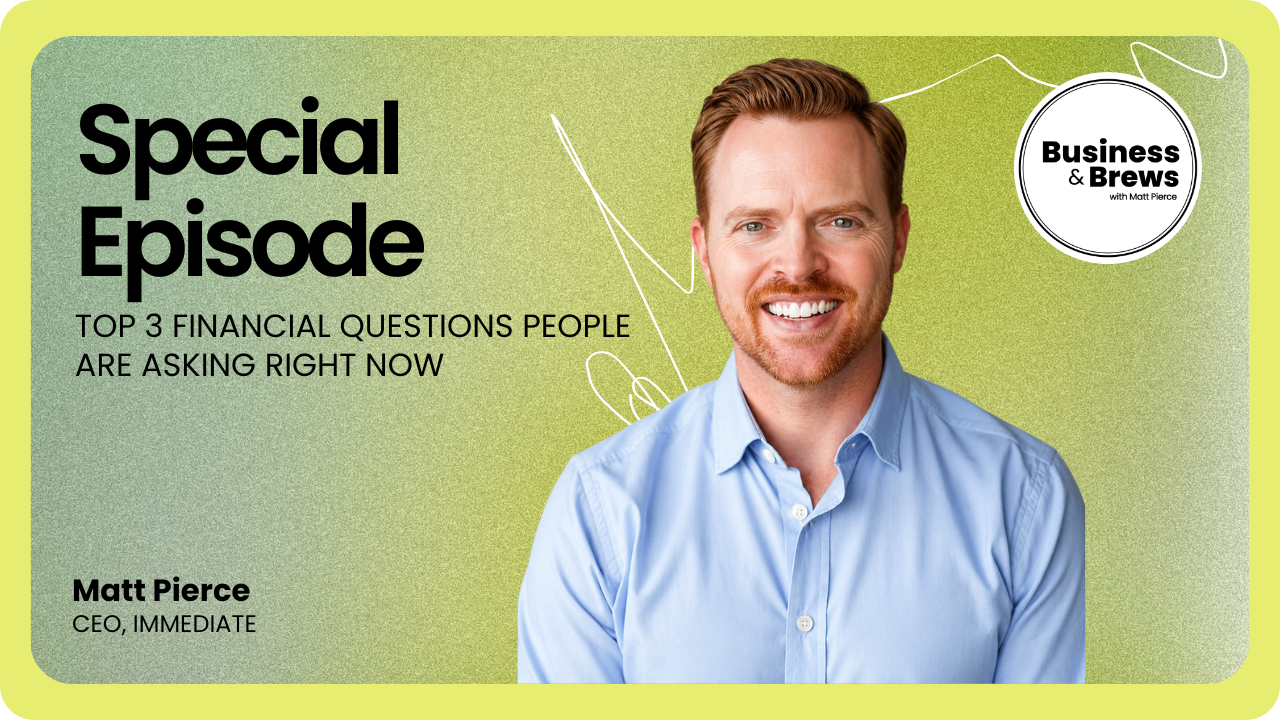
What financial questions are on people's minds today? Inside the ImmediatePay app, employees can turn to Fortuna, our AI-powered financial wellness coach, for answers about budgeting, debt, savings, and more. Looking at the most common questions users ask provides an interesting snapshot of where many Americans are today.
The three questions that consistently rise to the top are:
While each question is different, they all point to the same goal: making smarter financial decisions and building a stronger financial future. In this episode of Business & Brews, Immediate Founder and CEO, Matt Pierce, shares his perspective on these timely financial questions and offers practical advice to help you take the next step with confidence.
With credit card interest rates averaging more than 20%, carrying a balance can make it feel like you're working hard without making progress.
The first step is recognizing that not all debt is created equal.
There are two proven strategies for paying down credit card debt:
The Debt Avalanche focuses on paying off the highest interest rate first while making minimum payments on everything else. This approach saves the most money over time.
The Debt Snowball focuses on paying off the smallest balance first. While it may cost slightly more in interest, the quick wins can create momentum and help you stay motivated.
The best strategy is the one you can consistently follow. Just as important is avoiding new debt while paying off old debt. Even building a small emergency fund can help prevent unexpected expenses from sending you right back into high-interest debt.
Debt relief isn't a single solution. It's an umbrella term that includes several different approaches, and understanding the difference matters.
Credit counseling, often offered by nonprofit organizations, can help you review your finances, create a budget, and develop a manageable repayment plan.
Debt consolidation combines multiple debts into one payment, often at a lower interest rate. While this can simplify repayment, it doesn't eliminate what you owe.
Debt settlement involves negotiating with creditors to reduce your debt, but it can also impact your credit and often comes with fees or additional risks.
Before choosing any debt relief option, take time to understand exactly what you're signing up for. Ask about fees, the impact on your credit, and whether you're being encouraged to stop making payments during negotiations. If something feels rushed or sounds too good to be true, it's worth slowing down and asking more questions.
Many people believe they need a 20% down payment to buy a home. In reality, that's one of the biggest misconceptions about homeownership.
Depending on the loan program, qualified buyers may be able to purchase a home with as little as 3% to 5% down. The key is remembering that the down payment is only one piece of the equation.
Before buying your first home, plan for four categories of expenses:
Instead of asking, "What's the minimum I need?" ask yourself, "How much do I need to buy a home and still feel financially secure afterward?"
Once you know your goal, work backward. Break your savings target into monthly milestones, adjust your timeline if needed, and explore options like down payment assistance programs or additional income opportunities. A clear plan makes homeownership feel much more achievable.
Whether you're paying off debt, exploring debt relief, or saving for your first home, financial progress doesn't happen overnight. It happens one decision at a time.
Start by understanding where you are today, create a realistic plan, and focus on the next step in front of you. Small, consistent actions build momentum and, over time, lead to meaningful financial progress.
In this episode of Business & Brews, Matt dives deeper into each of these questions, shares practical strategies you can start using today, and offers real-world advice for building a healthier financial future.
🎙️ Listen to the latest episode of Business & Brews and take the next step toward reaching your financial goals on Spotify, Apple Podcasts, or YouTube.
Learn about useful tips and our latest news